Quantum mechanics, the past 100 years, the next 100 years
Exactly 100 years ago, in 1925, quantum mechanics was born. The German physicist Werner Heisenberg published the first formal system of quantum mechanics, "matrix mechanics. In 1926, the Austrian physicist Erwin Schrödinger proposed the theory of wave forms, and in 1927, the "uncertainty principle," the essence of quantum mechanics, was published again by Heisenberg. Thus, starting in 1925, the world entered the era of the quantum revolution. In Japan, the Taisho era ended and the Showa era began.
WITH THE BIRTH OF QUANTUM MECHANICS, HUMANITY HAS DRAMATICALLY DEEPENED ITS UNDERSTANDING OF THE MICROSCOPIC WORLD OF NATURE OVER THE PAST 100 YEARS AND HAS CREATED NEW TECHNOLOGIES ONE AFTER ANOTHER. IT CAN BE SAID THAT THE CENTURY FROM THE 20TH TO THE 21ST CENTURY HAS INDEED BEEN ONE IN WHICH HUMANITY HAS WALKED HAND IN HAND WITH QUANTUM MECHANICS. THE APPLICATION OF QUANTUM MECHANICS HAS LAID THE FOUNDATION FOR MODERN TECHNOLOGIES SUCH AS PERSONAL COMPUTERS, SMARTPHONES, AND LEDS. THESE TECHNOLOGICAL INNOVATIONS DESERVE TO BE CALLED THE "SECOND INDUSTRIAL REVOLUTION," COMPARABLE TO THE "INDUSTRIAL REVOLUTION" THAT BEGAN WITH THE INVENTION OF THE STEAM ENGINE IN THE 18TH CENTURY.
Quantum mechanics is a field that holds appeal not only for experts but also for those outside the discipline; however, it can also be perceived as extremely complex and somewhat intimidating. In recent years, though, we’ve increasingly encountered terms like “quantum computers” and “quantum cryptography” in our daily lives through the media and social media. “Quantum” is no longer just a “nerdy” topic for scientists; it is becoming a subject that concerns each and every one of us. The Physical Society of Japan has organized Quantum Fest out of a strong desire to provide a venue where everyone—experts and non-experts alike—can experience the wonder and appeal of quantum mechanics, as well as the potential of quantum technology, and come to see quantum science as something that directly affects their own lives.
Albert Einstein is said to have remarked, “The world is a dangerous place to live in—not because of the people who are evil, but because of the people who are indifferent.”The danger of losing interest in science remains as relevant today as ever. Over the past century, having endured the painful experience of the misuse of nuclear energy, we have grappled with the question of how to properly utilize science and technology. Differences in expertise, gender, or nationality are entirely irrelevant to this question.While research and development in science and technology are the role of experts, the results and responsibilities of such endeavors concern society as a whole. We are convinced that, even regarding cutting-edge science such as quantum mechanics, it is essential for everyone to take an interest and work together to consider how it should be utilized—this will be the key to shaping the next 100 years. We sincerely thank all of you who attended, and we hope that Quantum Fest will serve as a catalyst for such awareness and dialogue.
Finally, we would like to express our deepest gratitude to everyone who provided warm support and encouragement for this event, including through crowdfunding. We also note that The Physical Society of Japan, marks the 80th anniversary The Physical Society of Japan, and 2027 will be a milestone year celebrating the 150th anniversary of the founding of Tokyo Mathematics Society ( Physico-Mathematical Society of Japan ).We sincerely ask for your continued support The Physical Society of Japan.
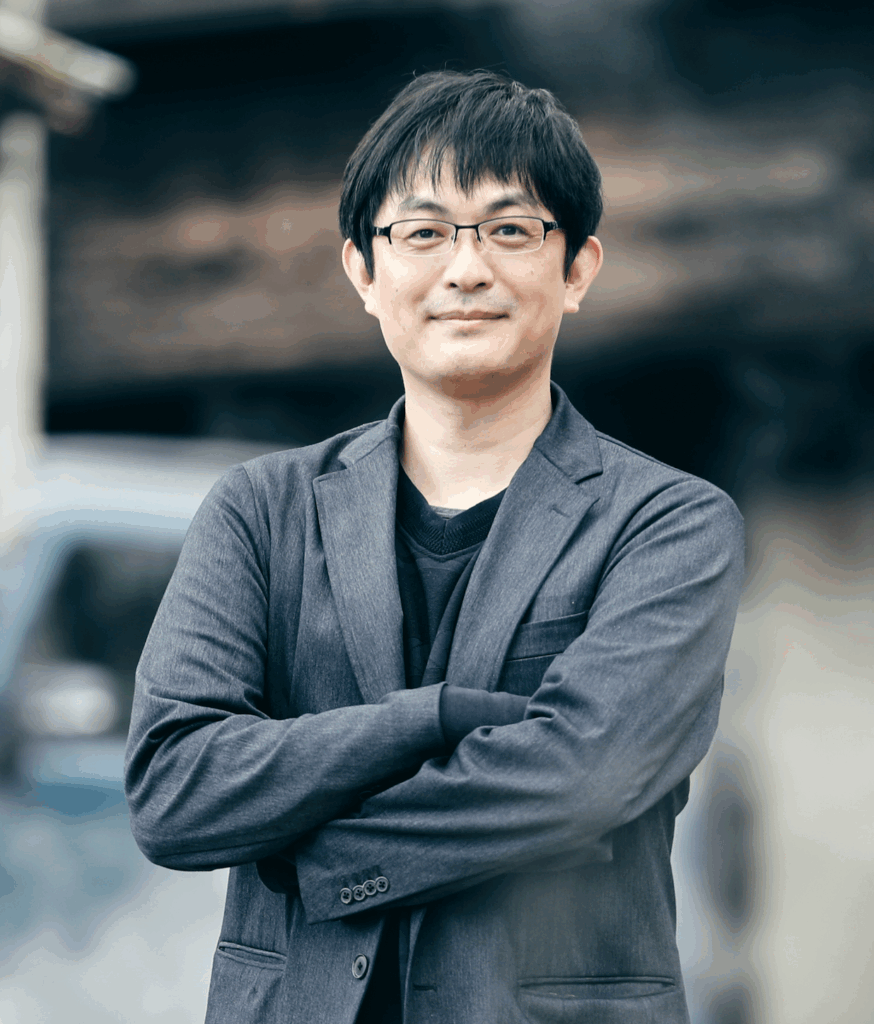
, Quantum Fest of Quantum Fest, The Physical Society of Japan (Professor, Tokyo University of Science)